

Faith Based Journals for Reflection: A Practical Buyer's Guide
Quick Summary
Faith based journals for reflection are notebooks built around prayer, scripture, gratitude and personal reflection, some with printed prompts and others with plain lined pages. Choose one by deciding between prompts and open pages, then checking paper quality, binding, portability and print size. A 365-day undated journal suits a full year of practice, while a 100-day guided journal suits first-timers.
- Prompted journals remove guesswork, while lined pages give room for free writing.
- Check paper weight first if you write with a fountain pen or marker.
- Wide-ruled lines suit larger handwriting and slower writing.
- A reflection routine can take about five to ten minutes a day.
- Keep the same routine order for a week before changing it.
Table of Contents
- Last Updated: November 16, 2026
- What Faith Based Journals Are Good For
- How to Choose a Faith Based Journal Without Overthinking It
- Five Faith Based Journals Compared by Reader Need
- Faith Journal Prompts for a Repeatable Reflection Routine
- Bible Journaling Prompts to Pair With Scripture
- How to Start Faith Journaling This Week
- Booking Your First Journal Into a Daily Practice
- Frequently Asked Questions
Last Updated: November 16, 2026
Last Updated: November 16, 2026
Faith based journals for reflection give structure to the quiet time many people already want to spend with God. At Cocoon Collection Co, we design journals and colouring books for people who want their faith to shape their daily routine without feeling like homework. This guide explains what these journals are good for, how to choose one without overthinking it, and how the five options in our range compare by reader need.
What Faith Based Journals Are Good For
A faith based journal is a notebook built around prayer, scripture, gratitude and personal reflection. Some have prompts printed on each page.
Most readers use them for a few common purposes:
- Recording prayers and watching how they change over time
- Writing notes after reading scripture or hearing a sermon
- Noting blessings and small moments of gratitude
Reflection matters because writing slows the mind down. Many people find that putting a thought on paper helps them notice patterns they would otherwise miss. A journal gives that practice a home.
How to Choose a Faith Based Journal Without Overthinking It
Most buying guides stop at prompts versus blank pages. The details below are the ones that decide whether you actually use the journal six weeks from now.
Start with prompts or open pages
If you freeze in front of a blank page, a prompted journal removes the guesswork. If you already know what you want to write, lined pages give you room to wander. A middle path is a lined journal with a short prompt at the top of each page, which gives structure without dictating the entry.
Check the practical details
- Paper quality. If you write with a fountain pen or marker, ask about paper weight before buying.
- Writing space. Line spacing matters more than page count. Wide-ruled lines suit larger handwriting and slower writing. Narrow lines suit compact handwriting and more words per page.
- Binding. A sewn or glued spine lies flatter, which makes writing near the centre easier. A spiral binding opens fully but can catch on bag fabric. A stapled booklet is light but less durable for daily use.
Match the journal to your experience level
A first-time journaler usually does better with a shorter, guided format: 100 days or fewer, with prompts and a clear daily structure. A reader who has kept a journal before can move to a longer undated format and set their own rhythm. A reader who reflects through making rather than writing may prefer a colouring or illustrated format paired with short scripture.
Consider faith tradition and language
Most faith based journals are broadly Christian, but the devotional language varies. Some use formal or traditional phrasing, others use conversational language, and some use specific names or translations that suit particular traditions. Read a sample page before buying if the wording matters to you. A journal that fits your tradition is easier to return to than one you have to translate in your head each morning.
Weigh physical, printable and digital options
A physical journal has a fixed cost and a fixed number of pages, but it does not need a device and it lasts. A printable PDF costs less up front and lets you reprint pages, though you need a printer and a folder to keep it tidy. A digital journal is searchable and portable on a phone, but many readers find writing by hand slows them down in a way that helps reflection.
Keep privacy in mind
Reflection often involves difficult material. Decide where you will keep the journal and who, if anyone, will see it. A locked drawer or a bag pocket is enough for most people. If writing about hard experiences brings up distress that does not settle, a journal is a personal practice rather than a substitute for professional support, and it is worth speaking to a GP or a qualified counsellor.
A quick decision path
If you want a full year of daily practice, choose a 365-day undated journal. If you are trying the habit for the first time, choose a 100-day guided or lined journal. If you reflect through making, choose a colouring or illustrated format. If you want to test the habit at low cost, start with a printable or a small booklet and upgrade once the routine sticks.
Five Faith Based Journals Compared by Reader Need
Each option below suits a different kind of reader. Prices are in AUD and were current at the time of writing.
| Journal | Price | Best For |
|---|---|---|
| Time with Yahweh: A 365 Day Journal | $23.00 | A full year of daily prayer and reflection |
| Musing with YHWH: A 100 Day Reflective Journal | $16.00 | A slower, focused daily rhythm |
| Jesus Musing: A 100 Day Journal for Conscious Connection | $16.00 | Conversational, everyday prayer |
| The Complete Cosy Times with YHWH Colouring Book | $15.00 | Stillness, stress relief and colouring |
| Cosy Times with YHWH Micro Colouring DIY Book | $8.00 | Small pauses, gifts and travel |
Price
Time with Yahweh: A 365 Day Journal
Time with Yahweh: A 365 Day Journal suits readers who want to build something lasting. It has 365 undated lined pages and a dusty pink cover with lace and pearl detailing.
Best for: readers committing to a full year of daily devotion. Skip if: you want a shorter trial or prefer prompts printed on each page.
Musing with YHWH: A 100 Day Reflective Journal
Musing with YHWH: A 100 Day Reflective Journal has 100 lined pages in a simple black and white design. At 9.5 x 11 inches it is a compact size, with a simple black and white design.
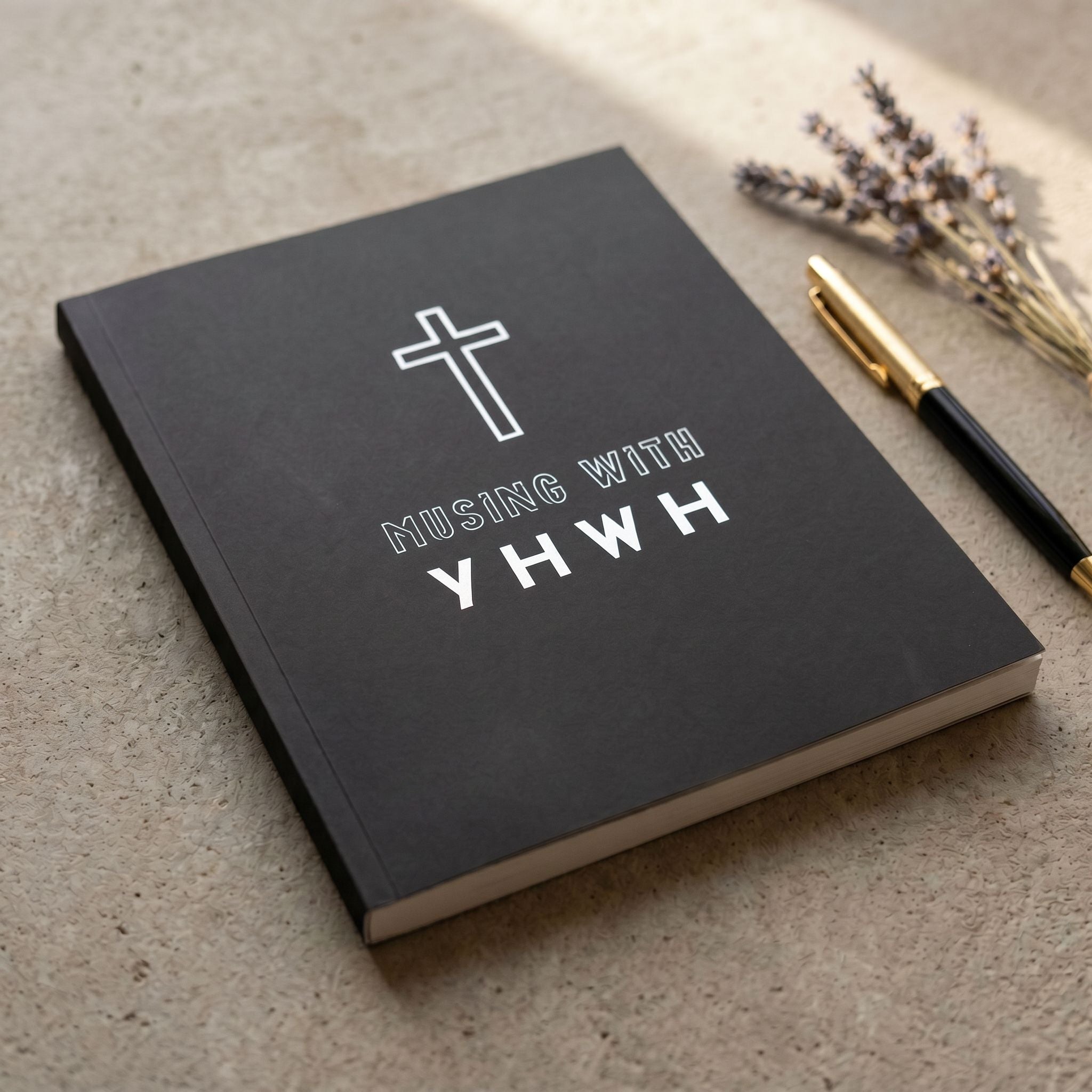
Best for: readers walking through a hard season who want an honest, unpolished space. Skip if: you want a larger number of pages or a colourful cover.
Jesus Musing: A 100 Day Journal for Conscious Connection
Jesus Musing: A 100 Day Journal for Conscious Connection is built around daily conversation with God. It has 100 lined pages and a bold urban design that suits readers who want their faith to match a lively, busy life.
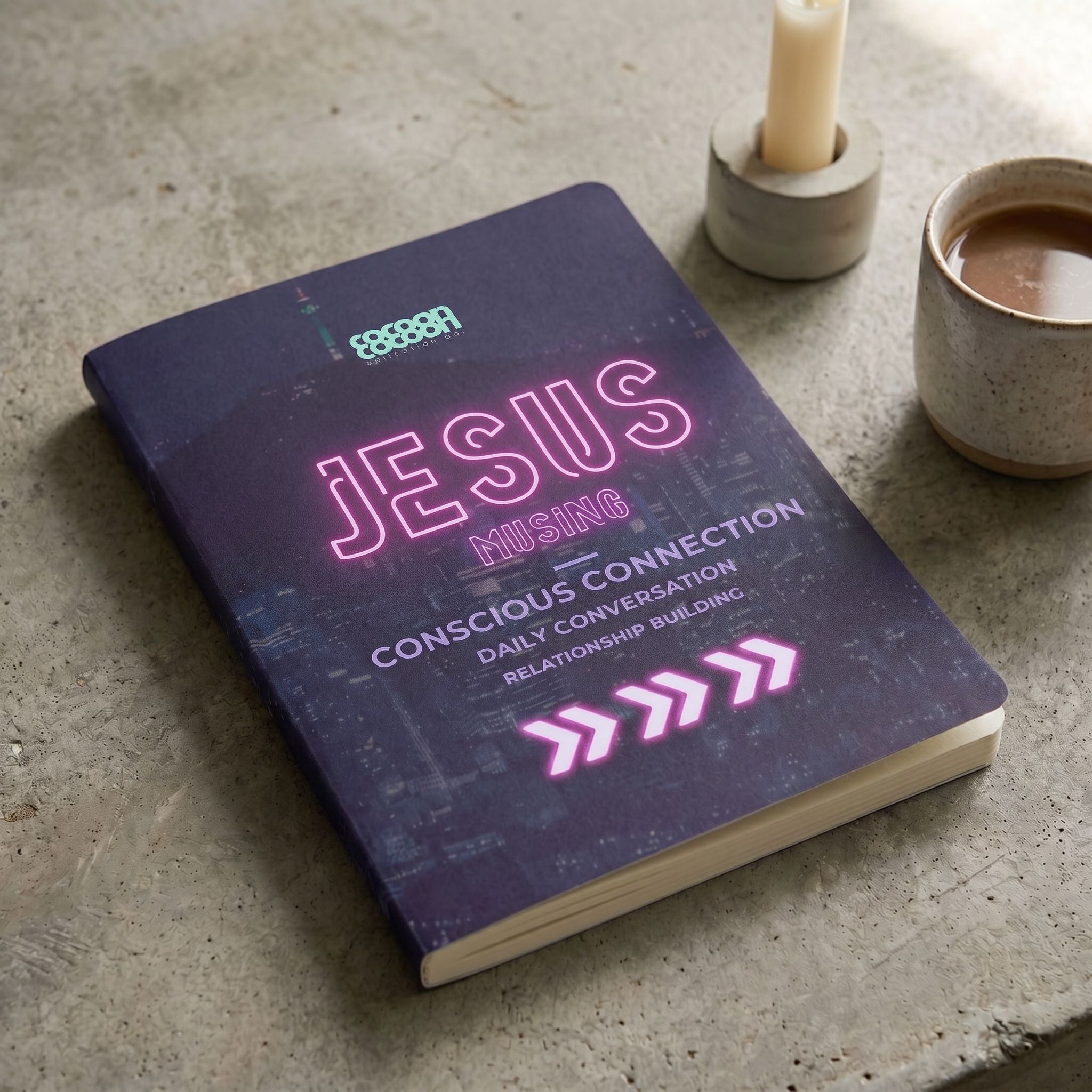
Best for: readers who prefer a conversational, informal approach to prayer. Skip if: you prefer a traditional or quiet visual style.
The Complete Cosy Times with YHWH Colouring Book
The Complete Cosy Times with YHWH Colouring Book combines colouring with devotion. It contains 27 single-sided illustrations and 26 short scripture verses, printed as a 6 x 9 inch paperback.
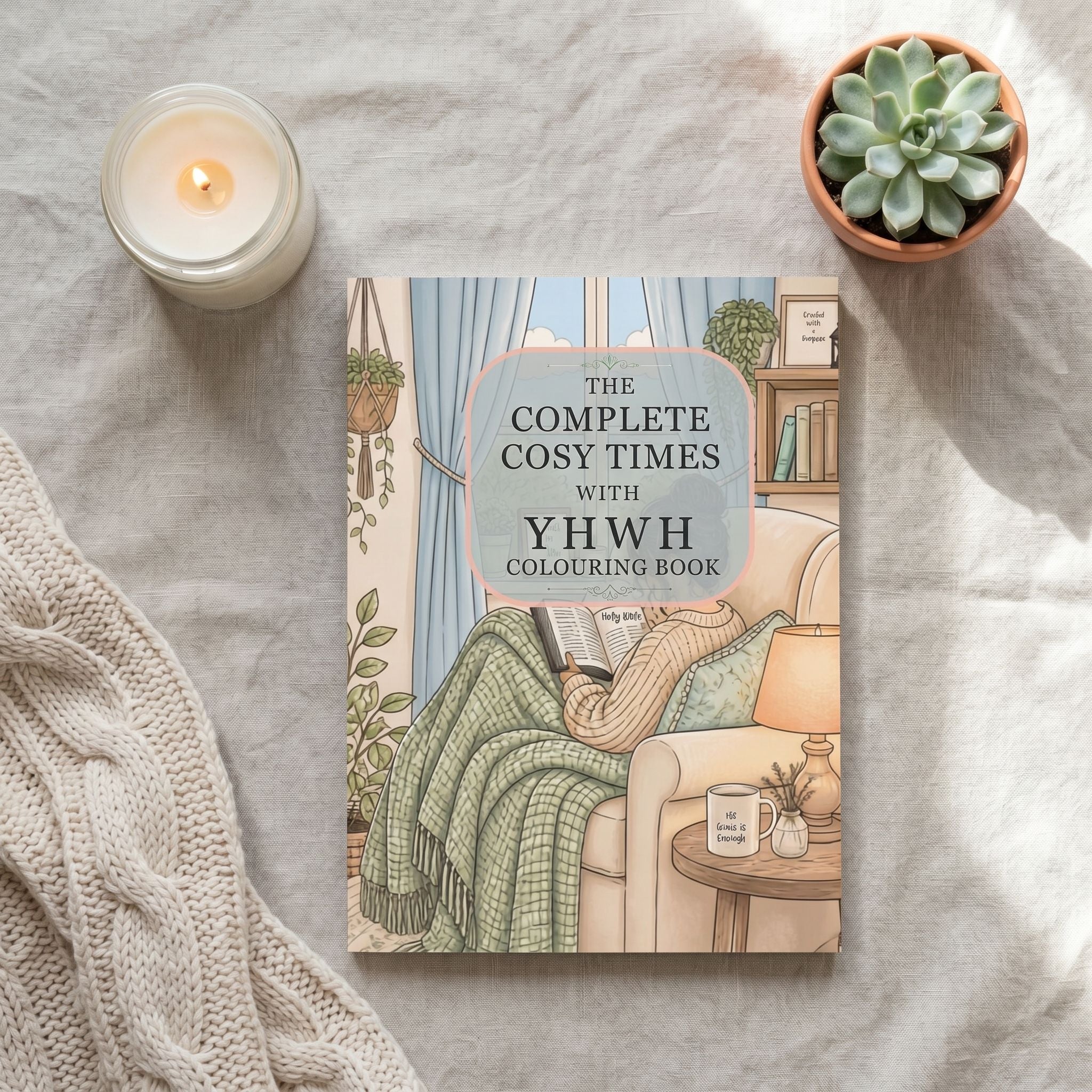
Best for: readers who find stillness through colouring and gentle meditation. Skip if: you want a writing journal rather than a colouring book.
Cosy Times with YHWH Micro Colouring DIY Book
Cosy Times with YHWH Micro Colouring DIY Book is a single printed sheet that folds into a small 8 page booklet. It arrives cello wrapped with card backing and is gift ready.
Best for: quick pauses, church bags, waiting rooms and stocking fillers. Skip if: you want a substantial book for daily use.
Faith Journal Prompts for a Repeatable Reflection Routine
A routine works best when it is short, repeatable and matched to the energy you actually have. The structure below takes about five to ten minutes and can be shortened on busy days without losing the thread.
- Read one short passage of scripture. A single verse or a short paragraph is enough.
- Write one thing you are grateful for today, however small.
- Write one prayer, even if it is only a sentence.
- Note one thing you want to notice during the day.
Keep the same order for a week before changing it. Consistency builds the habit far better than length.
Adapt the routine to your energy
A common pattern is to treat the routine as all or nothing. It does not have to be. On a low-energy day, keep steps two and three and skip the rest. On a day with more space, add a fifth step: write one sentence about how you want to respond to what you read.
What a finished entry can look like
A short entry might read: "Read Psalm 23. Grateful for a quiet morning. Prayer: help me trust the slower pace this week. Notice: the way I react when plans change." That is four lines and it took two minutes. Over a month, those four-line entries become a record you can read back and see patterns in.
Prompts by reflection style
Different readers reflect in different ways. Pick the set that fits how you think, rather than working through all of them.
For gratitude-focused reflection:
- What is one thing today that I would have missed if I had not slowed down?
- Who showed me kindness this week, and how did I respond?
- What small provision am I taking for granted?
For scripture-focused reflection:
- What word or phrase stood out in this passage, and why?
- What does this passage suggest about how I treat other people?
- What question would I ask the writer if I could?
For prayer-focused reflection:
- What am I carrying that I have not yet put into words?
- What am I asking for, and what am I afraid the answer might be?
- Where did I notice God's presence this week, even faintly?
For hard seasons:
- What do I need to say honestly today, without tidying it up?
- What is one small thing that felt steady this week?
- What would I say to a friend in my position?
Write the date at the top of each entry.
Watch out: if reflection starts to feel like a performance or a source of guilt, shorten the routine rather than abandoning it.
Bible Journaling Prompts to Pair With Scripture
Bible journaling prompts help you move from reading into reflection. Useful questions include:
- What stands out to you in this passage, and why?
- Which word or phrase do you want to think about today?
- How does this verse connect with something you are facing?
Write the verse reference at the top of the page so you can return to it later. Over time, the entries become a record of how your understanding has grown.
How to Start Faith Journaling This Week
Starting is simpler than it looks.
Write for five minutes on the first day. Do not worry about neatness or making the entry meaningful. The goal is simply to open the page.
If you miss a day, pick up where you left off. A journal is not a test. It is a record of showing up.
Booking Your First Journal Into a Daily Practice
Once you have chosen your journal, decide when you will use it and tell someone about your plan.
If you want support building a steady routine, our coaching courses can help you set a rhythm that suits your life.
Ready to begin? Find the journal that matches your season and start your daily practice with Cocoon Collection Co.
Frequently Asked Questions
What should you write in a faith-based journal?
Most people start with a short prayer, a line or two of scripture, and an honest note about what the day held. Gratitude entries, prayer requests and answered prayers work well too. A faith based journal does not need a set format; the aim is to write regularly enough that you can look back and see how your thinking and prayer life have shifted. Lined journals such as Musing with YHWH suit free writing, while prompted pages help when you are unsure where to begin.
How do you start a faith journaling practice?
Begin with a small, fixed time, such as five minutes after breakfast or before bed. Choose one journal, write the date, and record one prayer and one thing you noticed about God that day. Keep a short list of prompts nearby so you are not starting from a blank page each time. Missing a day is normal; returning to the page without guilt is what keeps the practice going over months.
What is the difference between a prayer journal and a faith journal?
A prayer journal focuses mainly on requests, petitions and records of answered prayers. A faith journal is broader, and can include scripture reflection, gratitude, sermon notes, questions and personal growth. Many people use one book for both. Time with Yahweh, a 365 day lined journal priced at $23.00, is designed for daily prayer, reflection and scripture meditation.
Can journaling help deepen your faith?
Writing slows your thoughts and makes you name what you actually believe, fear or hope for. Over time, a faith based journal lets you see patterns in how you have prayed and where your trust has grown. It does not replace prayer or church life, but it gives a steady, personal record of your relationship with God that is easy to revisit.
